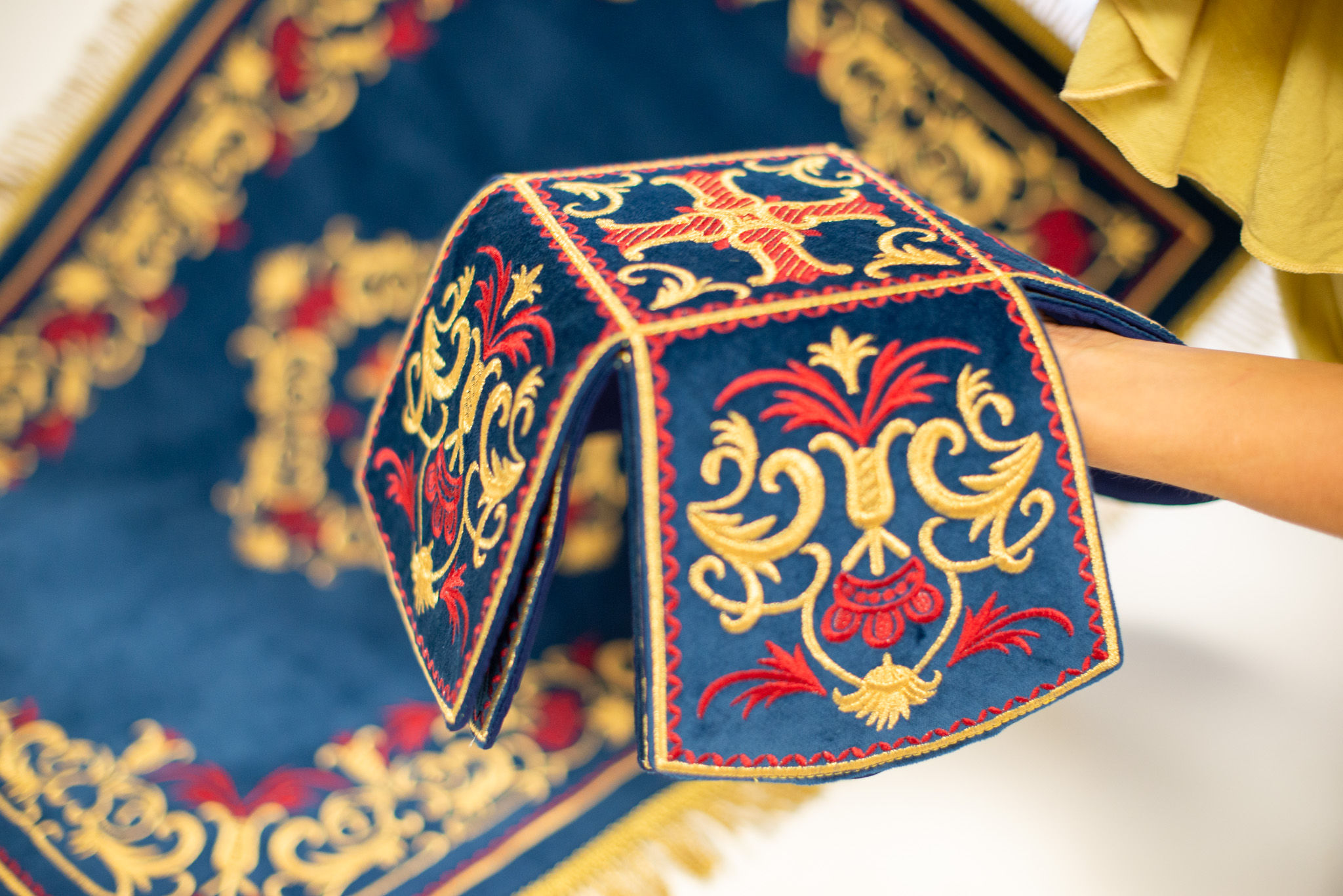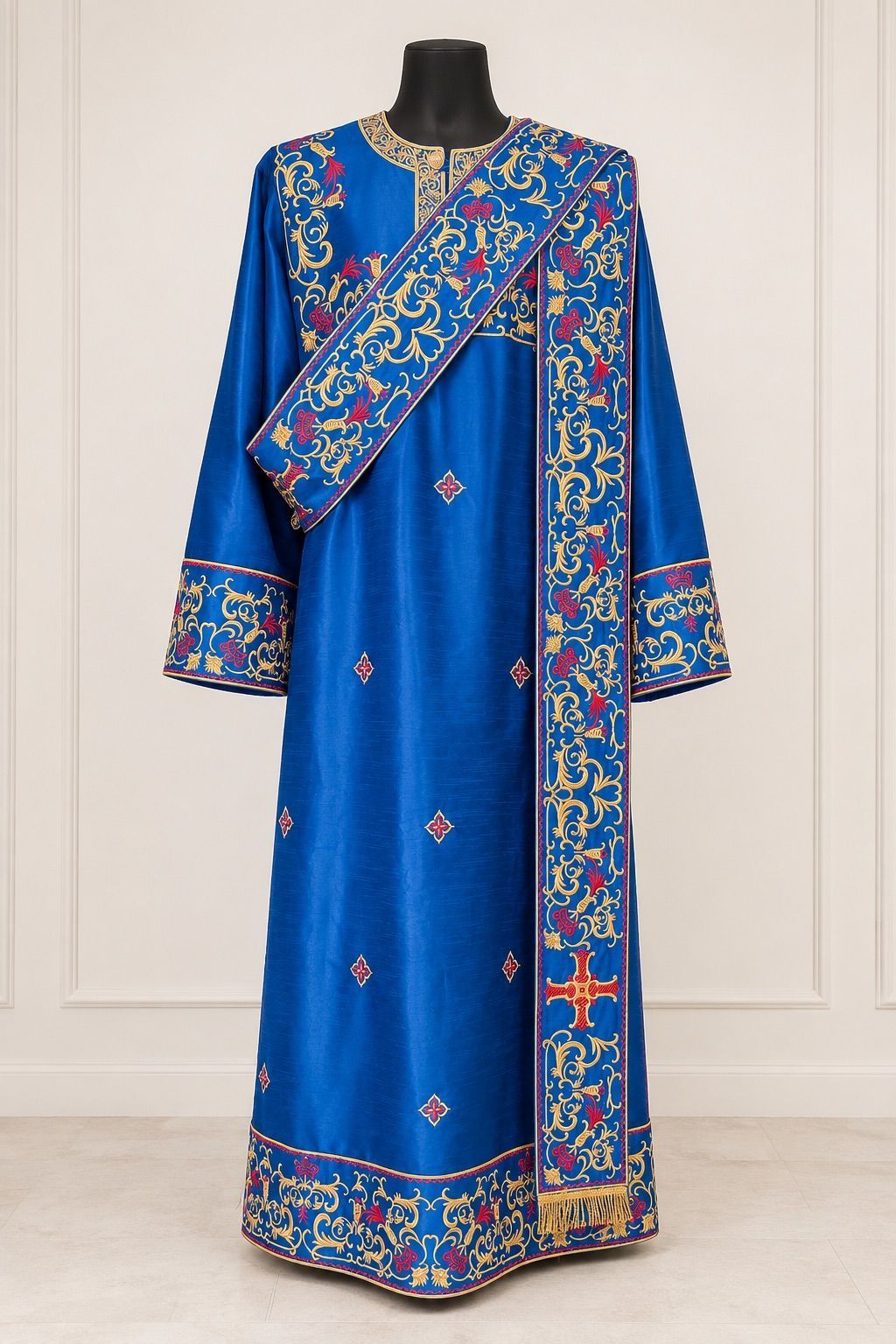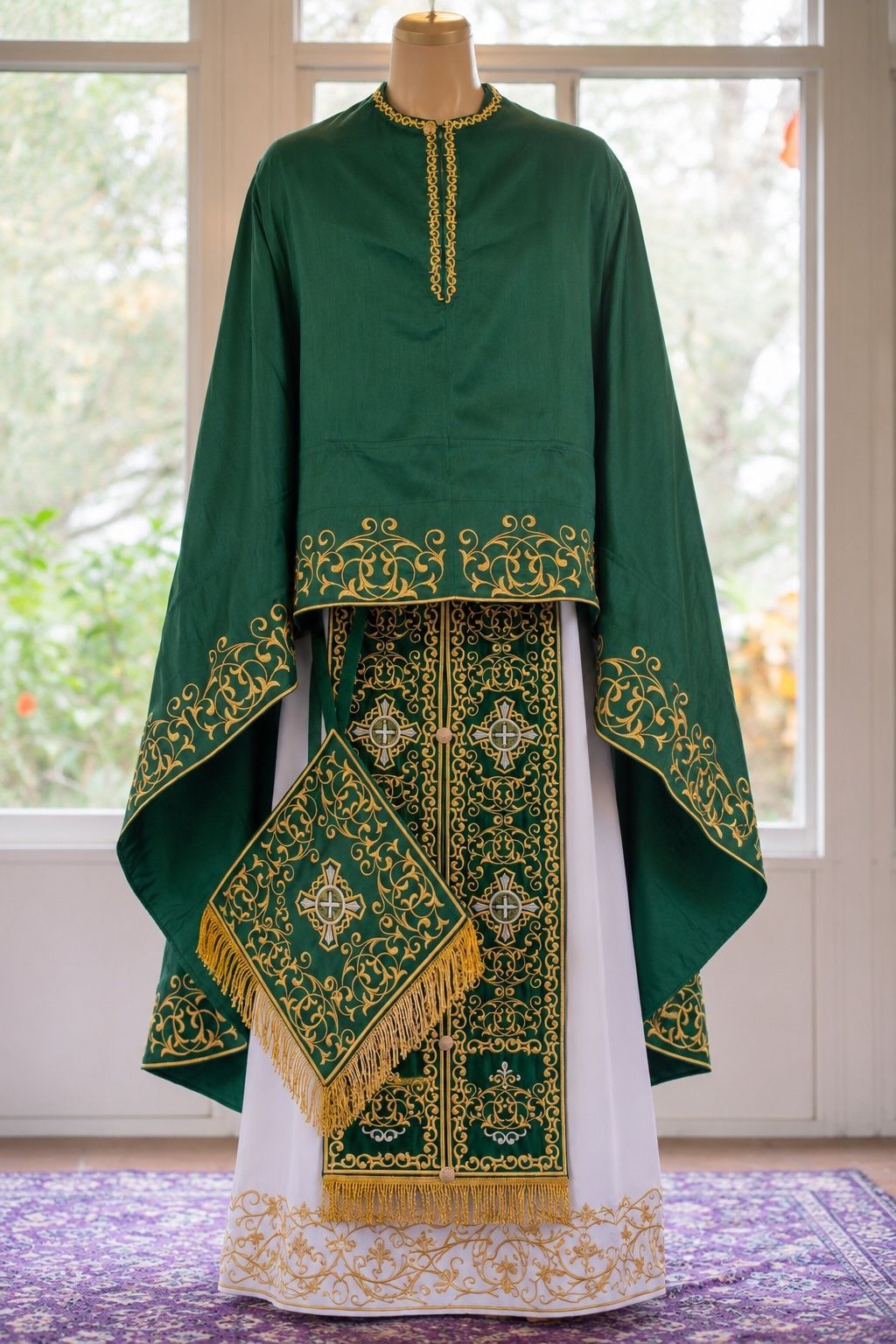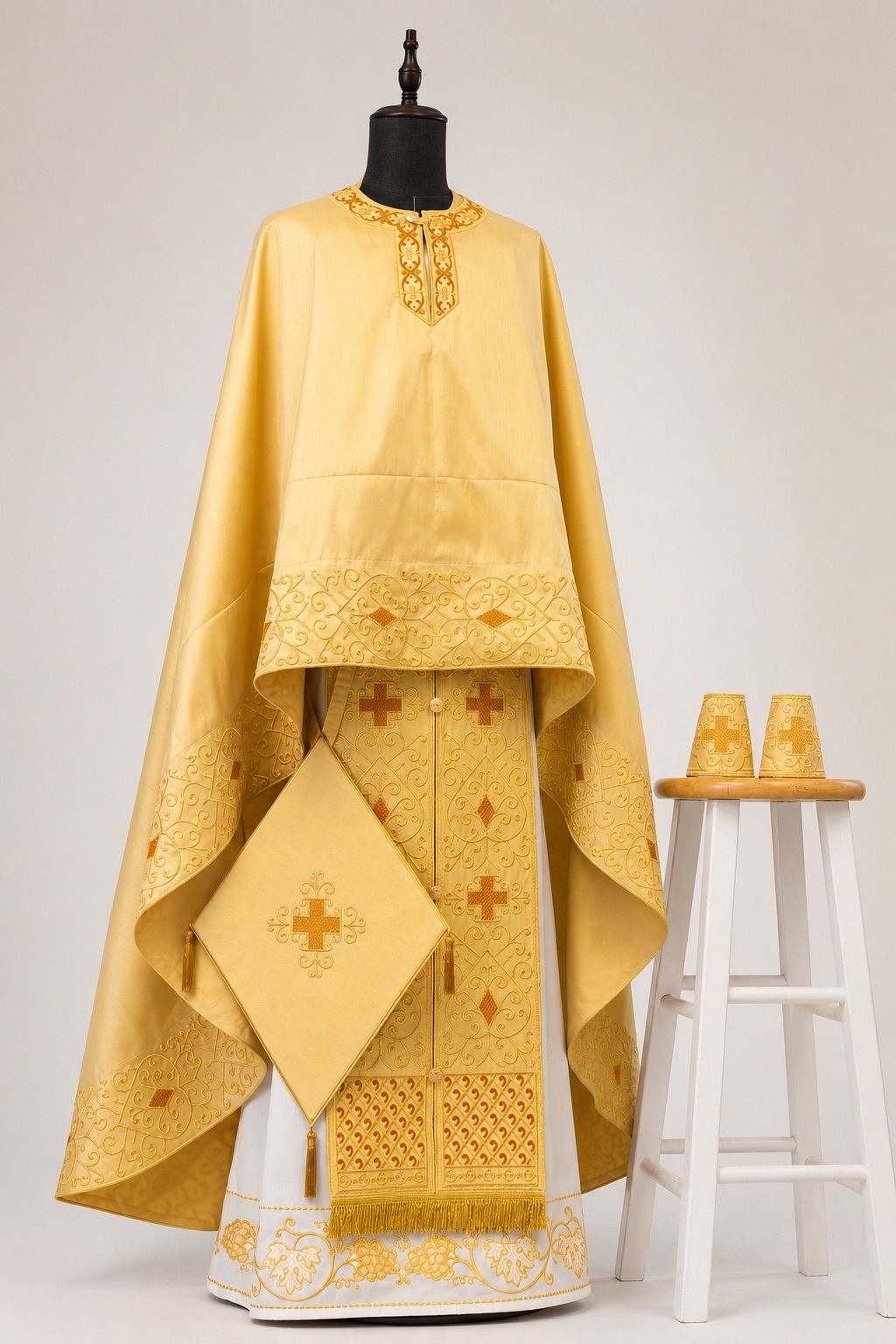
A hand-embroidered set of Orthodox vestments is meant to last. The brocade is heavier than ordinary upholstery cloth, the seams are reinforced, the metallic-thread embroidery is mounted on a stable backing — every part of the construction is designed for twenty or thirty years of weekly use. But "designed to last" only works if the vestments are treated with reasonable care. Most of the early failures we see in old vestments come not from manufacturing defects but from mistakes in cleaning and storage that could easily have been avoided.
This guide is the practical knowledge that experienced sacristans pass on to new ones. It covers what to do after every Divine Liturgy, how to handle the inevitable wax and oil stains, how to store vestments between feasts, and when a vestment needs professional restoration versus retirement.
The Five-Minute Routine After Every Service
The single most important habit for the long life of a vestment is what happens in the five minutes after the priest unvests. Most damage is done not by the Liturgy itself but by what happens between the Liturgy and the next one. The minimum routine:
- Hang each piece on a wide shoulder hanger — never on a coat peg by the collar, never folded over a chair. Wide hangers distribute the weight of the brocade across the full shoulder of the garment instead of stretching the neckline. We strongly recommend wooden hangers at least 18 inches (45 cm) wide, padded if possible.
- Brush off dust and incense soot with a soft brush. A natural-bristle clothes brush works well. Brush in one direction following the weave of the brocade. Pay particular attention to the shoulders and collar where airborne incense settles.
- Air out the vestment for at least an hour before storing it in a closet. Vestments absorb moisture from the priest's body during service; storing them damp accelerates brocade decay and tarnishes metallic thread. Open a window, hang the vestment in a ventilated room.
- Inspect for visible damage — wax drips, loose threads, snagged embroidery. Catch these early; they are easy to address fresh and difficult after they've set.
That's it. Five minutes after every service. A vestment cared for this way will outlast its priest.
Stain Removal: What Works and What Doesn't
Three substances cause most of the staining on liturgical vestments: candle wax, incense oil and smoke, and communion wine. Each requires a different approach.
Candle Wax
Wait until the wax has fully hardened — about ten minutes after the drip happens. Then gently lift it off with a blunt edge (a butter knife or a credit card edge works well). Most of the wax will come away cleanly. For the residual film left on the brocade:
- For unembroidered areas: place a clean paper towel over the residue and press with a warm (not hot) iron. The remaining wax will melt into the paper towel. Replace the towel and repeat until the residue is gone.
- Near embroidery: do not iron — the heat damages metallic thread. Instead, leave the residue. A specialist dry-cleaner can address it during the next professional cleaning.
Oil (Lamp Oil, Anointing Oil, Olive Oil)
Treat immediately if at all possible. Blot — never rub — with a clean white cloth to absorb the surface oil. Then sprinkle the affected area generously with talcum powder or cornstarch and let it sit for several hours. The powder draws out the oil. Brush off the powder and inspect. Repeat if necessary. For persistent oil stains, a specialist dry-cleaner can use solvents that a parish cannot safely handle.
Communion Wine
Wine is the most difficult of the three because it sets quickly. Blot — do not rub — with a clean white cloth, working from outside the stain inward. Cold water (never hot — heat sets wine stains permanently) can be used to dilute fresh stains, but only on unembroidered areas. For wine on or near embroidery, do nothing on the spot; bring the vestment to a specialist dry-cleaner within a week.
Professional Cleaning: When and Where
A hand-embroidered vestment should be professionally cleaned only when there is a specific reason — a noticeable stain or smell, or every few years for a thorough refresh. Over-cleaning is itself a source of wear: the abrasion of cleaning, even gentle dry-cleaning, eventually thins the metallic thread.
The hard part is finding a dry-cleaner who works with liturgical textiles. Most general dry-cleaners will treat a hand-embroidered phelonion the same way they treat a wool suit — pressing flat with high heat that crushes the goldwork. The safe approach:
- Ask your bishop's office for a referral — most dioceses know one or two professional cleaners who do this work.
- Or contact the workshop that made the vestment. We routinely arrange specialty cleaning for vestments we made, and we can recommend cleaners we trust.
- Never machine-wash, never tumble-dry. The brocade survives; the embroidery does not.
- Press around embroidery, not over it. If pressing is needed, use a press cloth (a thin white cotton sheet placed over the fabric) and a warm — not hot — iron, and work only on the unembroidered areas.
Long-Term Storage: Between Feasts
Vestments worn rarely — seasonal sets used only for Pascha, Lent, or a patronal feast — spend most of the year in storage. Where and how matters:
- Hang on wide padded hangers in a closet or wardrobe. Do not fold.
- Cover with a breathable garment bag — cotton or muslin, never plastic. Plastic traps moisture against the brocade and accelerates tarnishing.
- Keep away from direct sunlight. UV light fades the silk in coloured embroidery and yellows white sticharia.
- Maintain consistent temperature and humidity. Attics get too hot in summer; basements get too damp. The ideal is the same closet conditions a person would find comfortable to live in — roughly 18–22 °C and 40–60 % relative humidity.
- Use cedar blocks or lavender sachets, never mothballs. Mothballs (naphthalene or paradichlorobenzene) chemically attack metallic thread.
For sets stored for more than a year — old festal sets, antique vestments, a deceased priest's vestments preserved for sentimental reasons — flat storage in an acid-free box wrapped in acid-free tissue is better than hanging. Archival textile boxes are available from museum-supply companies.
Common Damage and How to Prevent It
Some failures show up consistently after years of use. Knowing what to watch for lets you catch the damage early:
- Wear at the cuffs of the sticharion. The priest's wrists rest on the corner of the Holy Table dozens of times each Liturgy; over years the cuffs fray. The fix is to commission new cuffs (poruchi) and replace, keeping the sticharion itself.
- Stretching at the shoulders. If a vestment is hung by the collar instead of on a wide hanger, it eventually deforms. Once stretched, it cannot be returned to shape. Prevention is the only cure.
- Tarnishing of metallic thread. Real silver thread tarnishes slowly over decades — many find this adds character. Plated thread can tarnish faster, especially in humid storage. Anti-tarnish strips (the kind used for silverware) placed in the storage bag slow this considerably.
- Catching of embroidery on rings or buttons. Snagged metallic thread is one of the most common forms of damage. Train altar servers and concelebrants to remove rings and watches before approaching vested clergy. If a thread snags, do not pull it — clip it gently at the surface with small scissors so it doesn't catch again.
Restoration versus Retirement
At some point — twenty, thirty, fifty years into a vestment's life — repair becomes either too expensive or impossible. Signs that a vestment is ready to be retired:
- The brocade is thinning visibly throughout (you can see light through it when held up)
- Multiple embroidered panels have failed or been replaced
- The lining has been replaced twice already
- Seams have been re-stitched in multiple places
If a vestment has only one or two problems and the rest is sound, restoration is worth considering. Common restorations include re-mounting the embroidered panels onto a fresh brocade (the embroidery itself can outlast the brocade by a generation), replacing a worn lining, or re-stitching tarnished metallic thread. We do this work routinely; send us photographs of any vestment you're considering restoring and we'll quote.
For vestments truly past restoration, the traditional practice is to burn them respectfully — the way old icons are retired — or to take them to a monastery for similar disposition. Do not throw consecrated cloth into ordinary trash.
One Long-Term Truth
Vestments cared for properly will serve longer than the priests who wear them. A phelonion ordered today for a thirty-year-old new priest can still be on the altar at his retirement, then continue serving his successor. The cost of a well-made set, amortised across that lifetime, comes out to perhaps a dollar per Sunday. The cost of replacing the same set every ten years because of preventable damage is several times higher.
If you are commissioning new vestments, see our priest vestments category. If you have an existing set that needs evaluation, send us photographs through our contact page and we'll tell you honestly whether to clean, repair, or retire.