Epigonation (Palitsa)
43 items


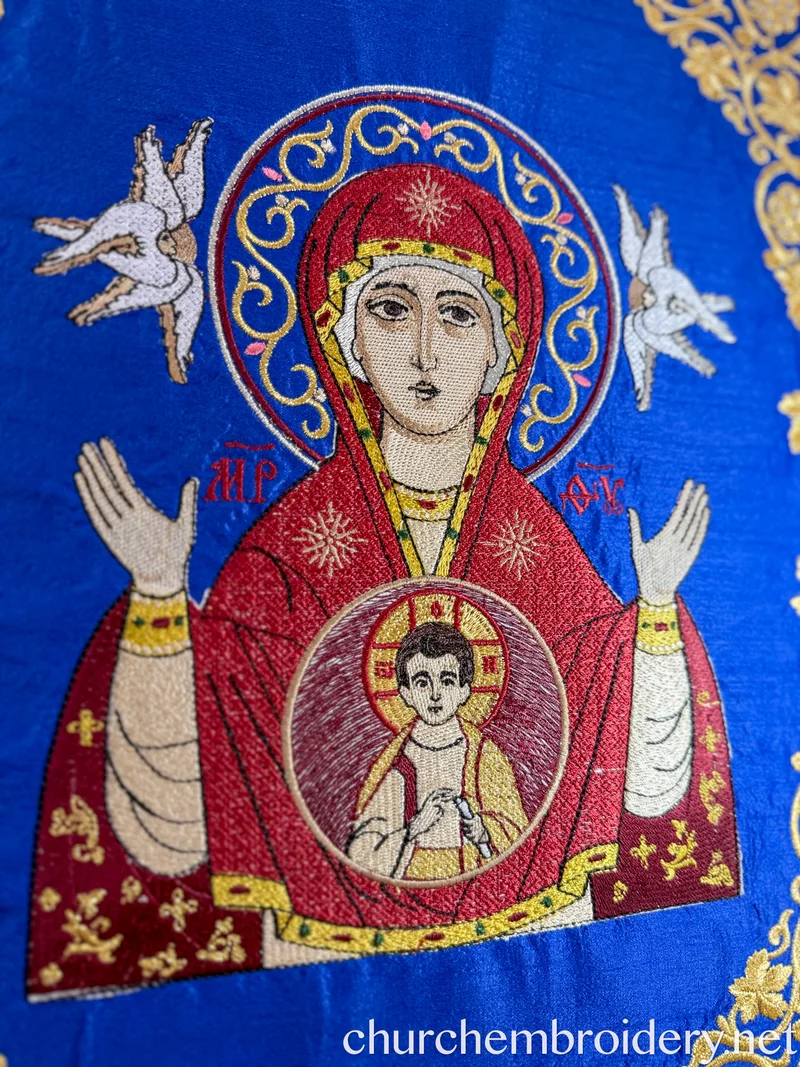


The epigonation — called palitsa in the Slavic tradition — is the stiff, diamond-shaped vestment that hangs from the right hip of a priest who has received it as an award, and of every bishop. We fully embroider each epigonation in our Florida atelier, with a cross, an icon, or a Resurrection scene worked in gold and silk on a firm backing.
Browse the epigonations below, or contact us to commission one with a specific icon — the Resurrection, the patronal feast of your parish, or a saint chosen for the priest who will wear it.
What is the epigonation (palitsa)?
The epigonation is a square or diamond-shaped panel of stiffened, embroidered cloth, suspended by one corner from a band over the right shoulder so that it rests against the right thigh. In Greek usage it is the epigonation; in Slavic usage the palitsa. It is worn by all bishops and by priests who have been awarded it as a mark of distinction.
Symbolically the epigonation represents the “sword of the Spirit, which is the word of God” (Ephesians 6:17) — the spiritual weapon girded at the side of the one who serves at the altar. The vesting prayer quotes Psalm 44: “Gird Thy sword upon Thy thigh, O mighty One.”
Who wears an epigonation
- Bishops wear the epigonation as a standard part of the episcopal vestments.
- Archimandrites and archpriests wear it as an awarded honour.
- Priests receive the palitsa from their bishop as one of the higher clergy awards, ranking above the nabedrennik (the rectangular thigh-shield worn on the opposite side).
How we make them
Each epigonation is built on a firm interlined base so the diamond holds its shape and hangs flat. The central design — most often a cross, the Resurrection, or an icon of the Mother of God — is embroidered in metallic gold and silver thread, frequently with raised goldwork on premium commissions. A tassel hangs from the lower point, and the upper corner carries the loop and band by which it is suspended.
We match the brocade and embroidery to an existing vestment set when you order, so the epigonation reads as part of the whole. If you need a specific icon, inscription, or colour, tell us before ordering and we will design it with you.
Frequently asked about epigonations (palitsa)
What is the difference between an epigonation and a nabedrennik?
The epigonation (palitsa) is the diamond-shaped award vestment worn at the right hip; the nabedrennik is the rectangular thigh-shield worn at the left. In Slavic practice the nabedrennik is the lower award and the palitsa the higher one. Bishops always wear the epigonation; priests receive each as a distinction from their bishop.
Can you embroider a specific icon on the epigonation?
Yes. The most common central designs are a cross, the Resurrection, or an icon of the Mother of God, but we can embroider any iconographic subject — the patronal saint of the parish, for example. Send us a reference of the style you want (Byzantine, Slavic, contemporary) and we will work from it.
Will it match my existing vestment set?
It can. If you send us a photo of your phelonion and epitrachelion, or order the epigonation together with a set, we match the brocade colour and embroidery so the pieces read as one. A stand-alone epigonation can also be made in any liturgical colour you choose.
How long does a custom epigonation take?
A standard fully embroidered epigonation takes 4-6 weeks. Pieces with a detailed embroidered icon panel or raised goldwork take 6-10 weeks. If you have an award ceremony or feast-day deadline, tell us when you order and we will confirm the timeline.
Do you ship epigonations internationally?
Yes — we ship the epigonation and the rest of our liturgical embroidery worldwide from our Florida atelier. International shipping is calculated at checkout from your address.


