Orthodox Priest Vestments
50 items


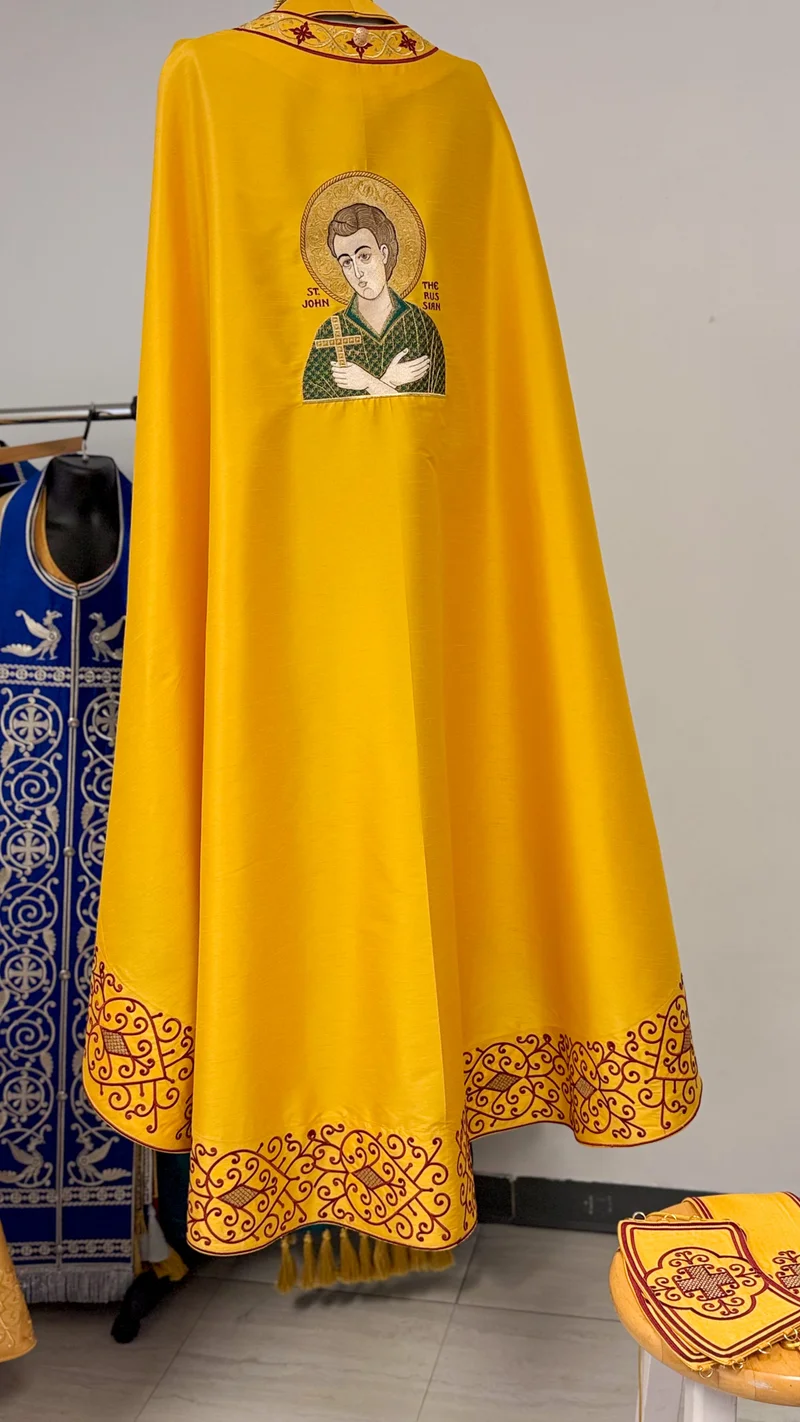


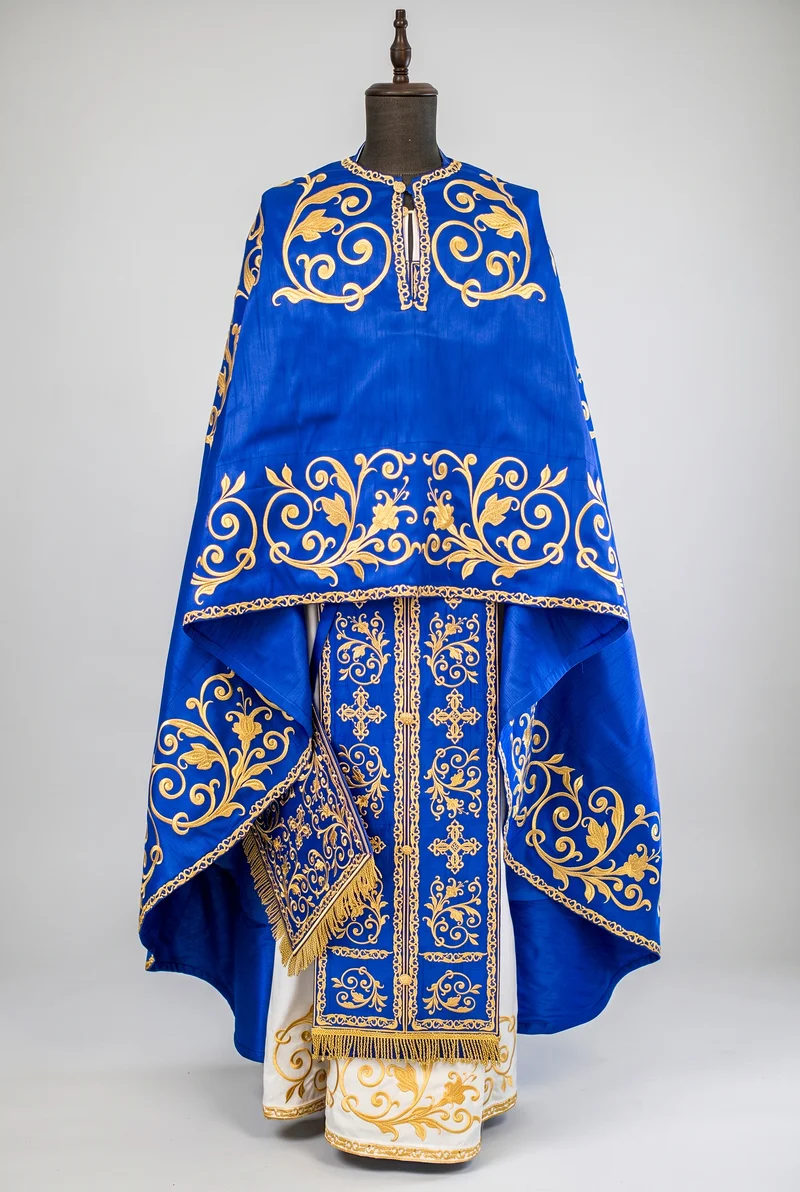


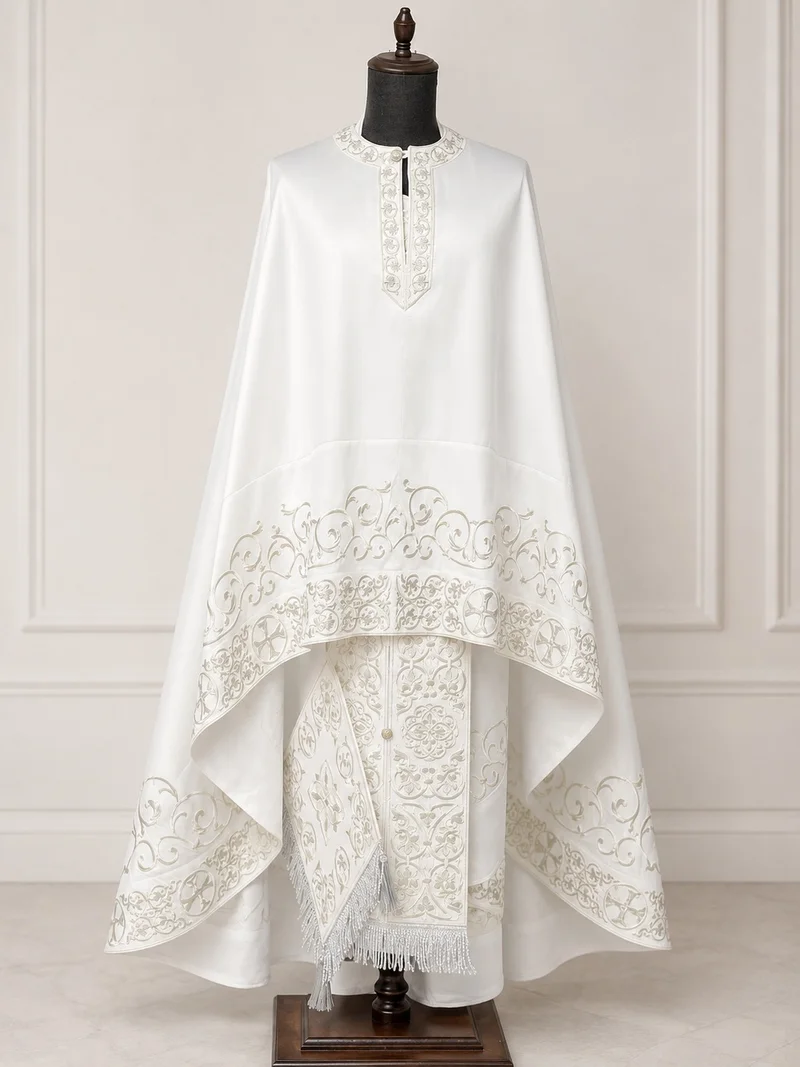


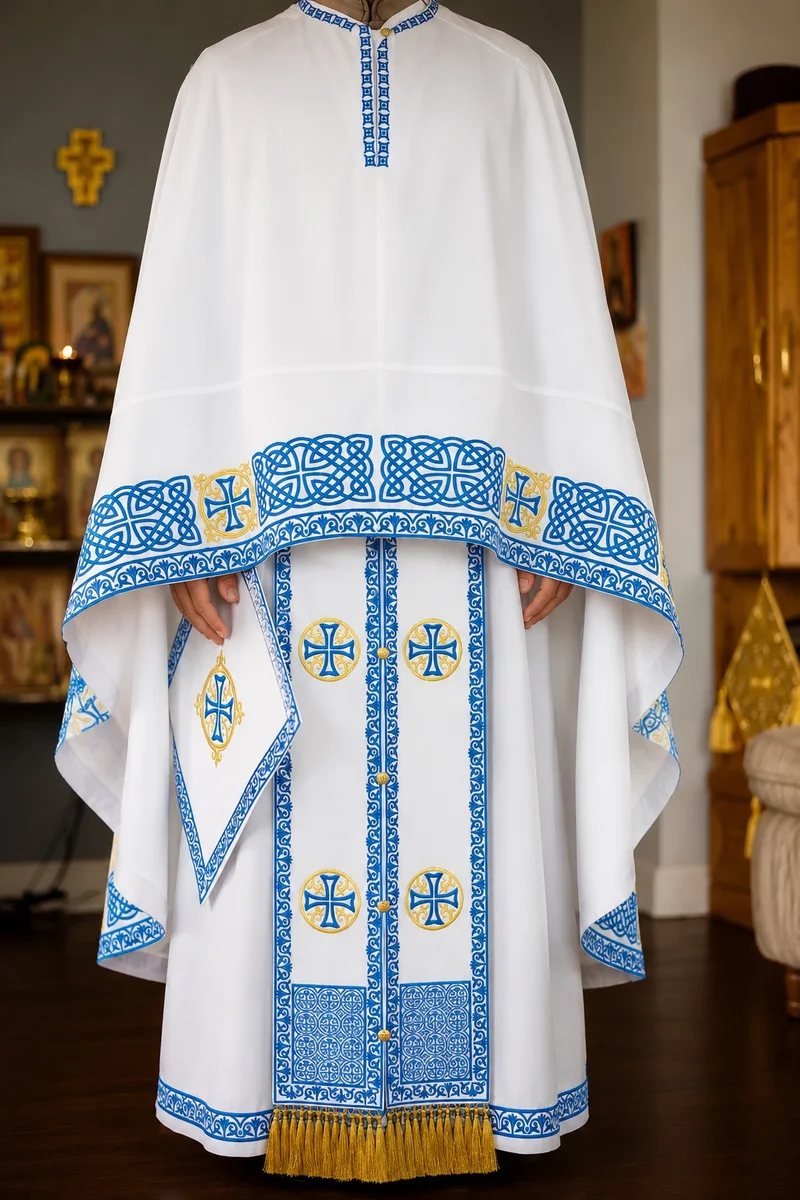


Our Orthodox priest vestments are sewn, embroidered and hand-finished in our Florida atelier — a full set typically includes a phelonion (the outer chasuble), sticharion (the long under-garment), epitrachelion (stole), zone (belt), and a pair of cuffs (poruchi). Each piece is made to the wearer's measurements and to the liturgical colour of the season.
We serve parishes across the United States, Canada, Greece, Romania, and the Slavic Orthodox world. Whether you are commissioning vestments for a newly ordained priest or replacing a worn set after years of service, we shape each garment around real liturgical use — generous cut, durable seams, and embroidery that holds up to incense, oil, and washing.
We make both Greek Orthodox priest vestments and Russian Orthodox sets, sewn to the cut, length and ornament of each tradition — tell us your jurisdiction and we tailor the set accordingly.
Part of our full range of Orthodox clergy vestments — see also deacon vestments and bishop vestments.
What's in a complete set of priest vestments?
The vestments worn by an Orthodox priest at the Divine Liturgy carry meaning long before they catch the eye. Each piece corresponds to a moment in salvation history and is described in the prayers said while vesting:
- Sticharion — the white inner robe symbolising the garment of salvation. In Slavic and Greek traditions the sticharion is often visible only at the cuffs and hem.
- Epitrachelion — the stole, signifying the grace of priesthood. A priest cannot serve a single sacrament without it.
- Zone — the belt, worn over the epitrachelion. Practical (it gathers the garments at the waist) and theological (girding for service).
- Poruchi (cuffs) — bound around the wrists, signifying the bonds of Christ and the strength of the hands lifted in prayer.
- Phelonion — the outer chasuble, the most visible vestment. Cut shorter in front so the priest's hands are free to bless and to handle the Holy Gifts.
Liturgical colours and when they're worn
Vestment colour follows the calendar. Most parishes order at least two full sets to start (gold and one penitential dark colour) and add seasonal colours over time:
- Gold / yellow — most Sundays and feasts of the Lord. The default working set in most parishes.
- White — Pascha, Theophany, the Nativity, weddings, funerals (in Greek practice).
- Red / crimson — feasts of martyrs; Holy Thursday and Holy Week in Slavic practice.
- Blue — feasts of the Theotokos.
- Green — Pentecost, Palm Sunday, feasts of monastic saints.
- Purple / dark red — Great Lent (Slavic practice) and the Cross.
- Black — Great Lent weekdays (Slavic) and burials.
Materials and embroidery
We work primarily with brocade woven in Greece and Italy, with embroidery in metallic-wrapped threads (gold, silver, oxidised silver) over a stiffened base. For premium commissions we offer goldwork (gold-laid embroidery over a padded outline) on icon panels — the technique used historically on Byzantine vestments, where the icon catches candlelight from across the nave.
All seams are reinforced for the weight of the brocade; linings are pre-shrunk cotton or polyester twill depending on the climate the vestments will serve in. Embroidery is washed and pressed before assembly so dimensions don't shift after the first cleaning.
How to order: measurements and timing
A made-to-measure phelonion and sticharion need nine basic measurements (height, neck girth, shoulder, sleeve length, chest, chest width, waist, garment length, weight). You can submit them online at our measurements form — we send a PDF copy with every order so the priest has it on file for the next commission.
Production time is typically 4–8 weeks for a standard set, longer for goldwork. Rush orders for ordinations are possible when scheduled in advance.
Caring for embroidered vestments
Hand-embroidered vestments are not delicate, but they reward a little care. After service: hang on a wide shoulder hanger (never on a peg by the collar), away from direct sunlight. Treat oil and wax stains within a few days. For cleaning, dry-clean by a specialist who knows how to press around embroidery — never tumble dry. With reasonable use a set will serve 15–25 years.
Frequently asked about priest vestments sets
What's included in a basic set of Orthodox priest vestments?
A basic set includes the phelonion (outer chasuble), sticharion (inner robe), epitrachelion (stole), zone (belt), and a pair of cuffs (poruchi). Most priests start with a gold-colour set for ordinary Sundays and add one or two seasonal colours later.
How long does it take to receive made-to-measure vestments?
A standard fully embroidered set takes 4–8 weeks from the day we receive measurements and confirmed colour choice. Sets with goldwork embroidery or large icon panels can take 10–12 weeks. We schedule ordinations and major feasts months in advance whenever possible — please contact us early.
What measurements do I need to send?
Nine measurements: total height, neck girth at the base, shoulder from neck to tip, sleeve length, chest girth, chest width across the back, waist girth, garment length from the 7th cervical vertebra to roughly two inches above the floor, and approximate weight. Our online form at /measurements/ walks you through each one with diagrams.
Can you make vestments to a non-standard colour?
Yes. We keep brocade in stock in the seven traditional liturgical colours but regularly source custom shades — wine-red for monasteries that follow that tradition, light blue for Theotokos feasts in Russian practice, ivory for weddings, and so on. Send us a swatch or a reference photo and we'll match it.
Do you ship Orthodox vestments worldwide?
We ship across the United States with USPS and internationally via DHL or USPS Priority Mail International. Worldwide delivery typically takes 5–12 business days after production is complete. We provide tracking and customs documentation.
What's the difference between Greek-cut and Russian-cut phelonion?
The Greek-cut phelonion is fuller and rounder, falling to mid-calf with a wide neckline. The Russian-cut is narrower, shorter in front and longer in back, with a stiff collar (or no collar). We make both — please specify your tradition when ordering, or send a photo of vestments your parish already uses.
Can I commission vestments with our parish's patron saint embroidered on them?
Absolutely. We embroider icon panels of any saint on the back of the phelonion or as a chest medallion. Send us the iconographic style your parish prefers (Byzantine, Slavic, contemporary) and we'll work from there. Lead time for an embroidered icon panel adds 3–4 weeks to the order.
How do I care for and store embroidered vestments?
Hang on a wide shoulder hanger immediately after each service, away from sunlight. Brush off dust with a soft brush. For stains, contact a specialist dry-cleaner who works with liturgical garments — most professional vestment-makers can recommend one in your area. Never machine-wash or tumble-dry embroidered pieces. With proper care a set lasts 15–25 years.


