The ordination of a new priest is one of the great days in the life of a parish. Months of preparation, a flood of relatives and friends, a hierarch from far away, and at the centre of it all a man whose life is about to change permanently. By long Orthodox tradition, the parish that raises a candidate for ordination presents him with his first set of vestments — usually as a corporate gift, sometimes from a single benefactor, sometimes from his godfather or sponsor.
The trouble is that "a set of vestments" can mean anything from a $700 starter package to a $5,000 hand-embroidered commission with custom iconography. And lead times can run from four weeks to four months. This guide walks through what a new priest actually needs on his ordination day, what the parish should plan to order, and how to coordinate it without scrambling at the last minute.
What He Absolutely Needs on Day One
A new priest cannot serve the Divine Liturgy without certain vestments. For his ordination and his first Liturgy after, he needs:
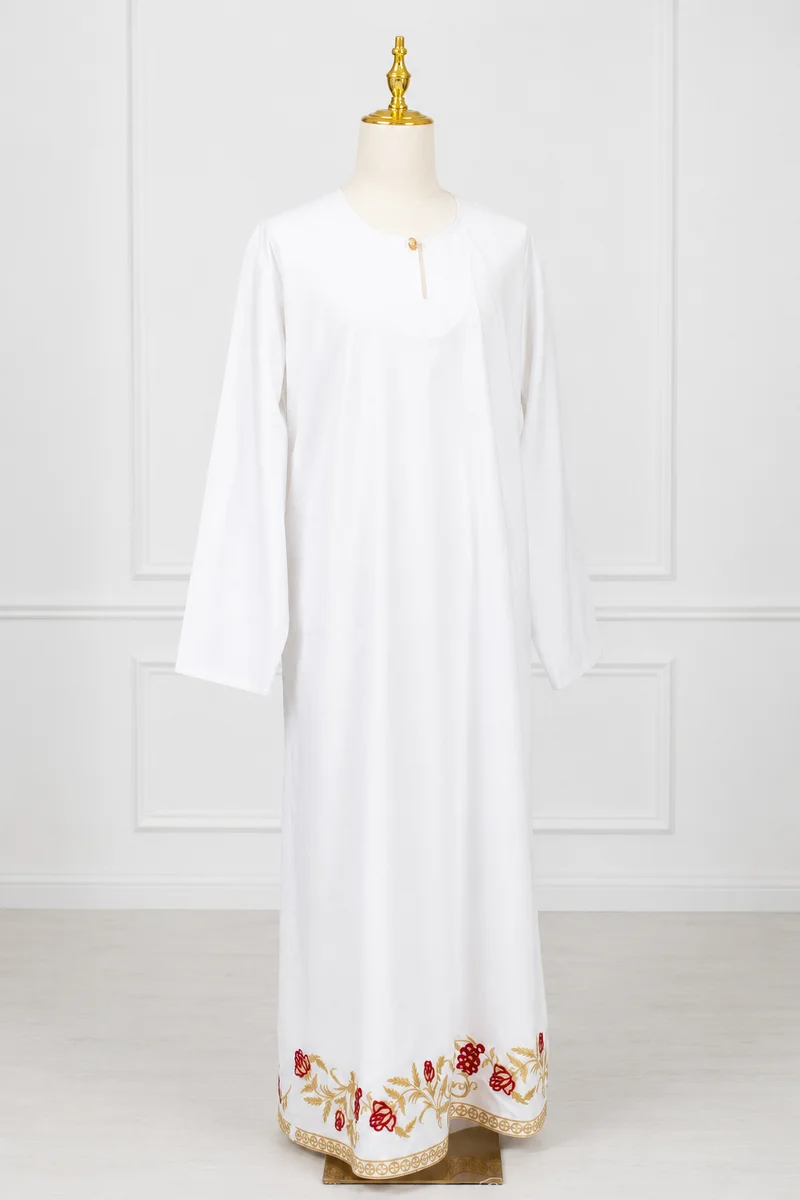
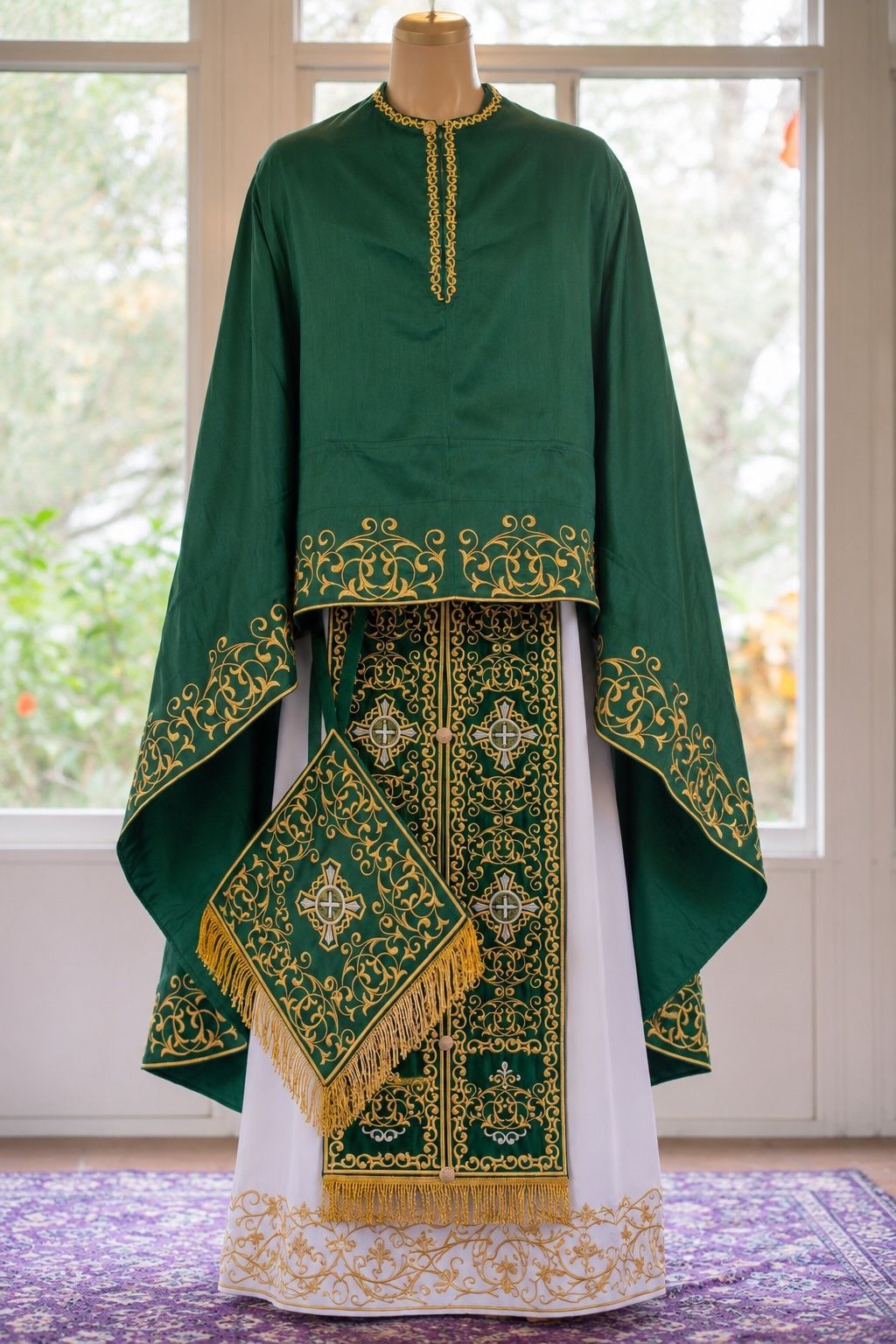
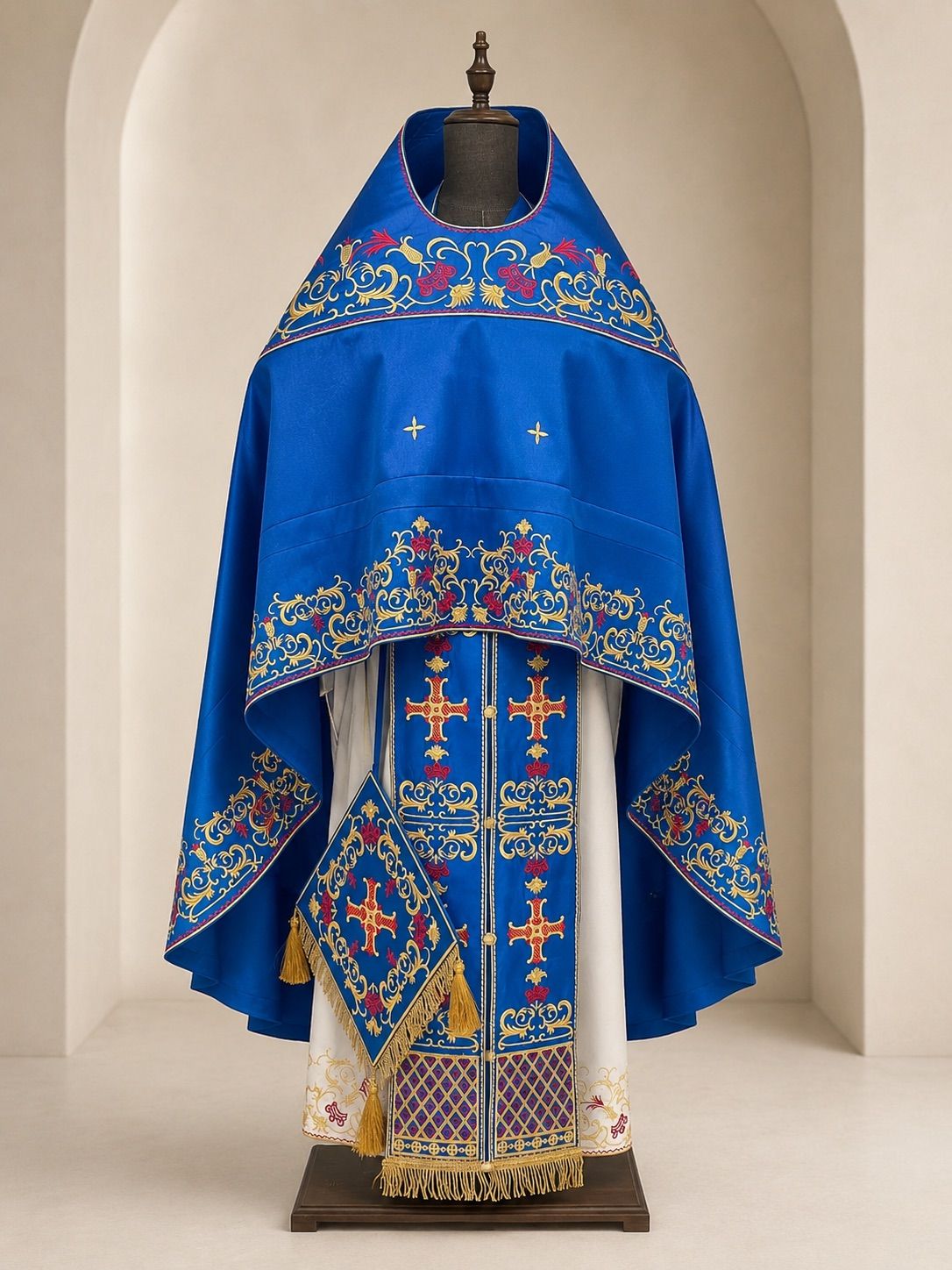
- A full set of liturgical vestments — phelonion, sticharion, epitrachelion, zone, and a pair of poruchi (cuffs). In one colour, almost always gold.
- A pectoral cross — given by the bishop at ordination, but many parishes also gift a fine pectoral cross as part of the day.
- A cassock (ryassa) if he doesn't already have one as a deacon.
- A Liturgicon (Sluzhebnik) — the priest's service book. Usually given by the bishop or the seminary.
That is the minimum to actually serve. If the parish can afford only one thing, it should be the full vestment set in gold. Everything else can be added in the months and years after.
What's Practical to Add Soon
Beyond the basics, several items are worth adding within the first months or year of priestly service:
- A second vestment set in a penitential colour — most often purple, for Great Lent. A new priest ordained in autumn or early winter will need this by the start of Lent.
- A white set for Pascha and the bright feasts — Pascha is the most important day of the year and the new priest should not serve it in his gold workhorse set.
- A red set for martyrs and (in Slavic practice) Holy Week.
- A second cassock and a second podriasnik — for rotation; cassocks wear out faster than vestments.
- An embroidered Gospel-book bookmark set — three or four bookmarks in liturgical colours, often with his monogram or ordination date. A traditional and well-loved gift. See our bookmarks category.
Most parishes spread these additions over the first two or three years, gifting one new set per major feast (a white set as a Pascha gift, a purple set just before Lent, and so on).
What Can Wait
The following are nice to have but unnecessary in the first year:
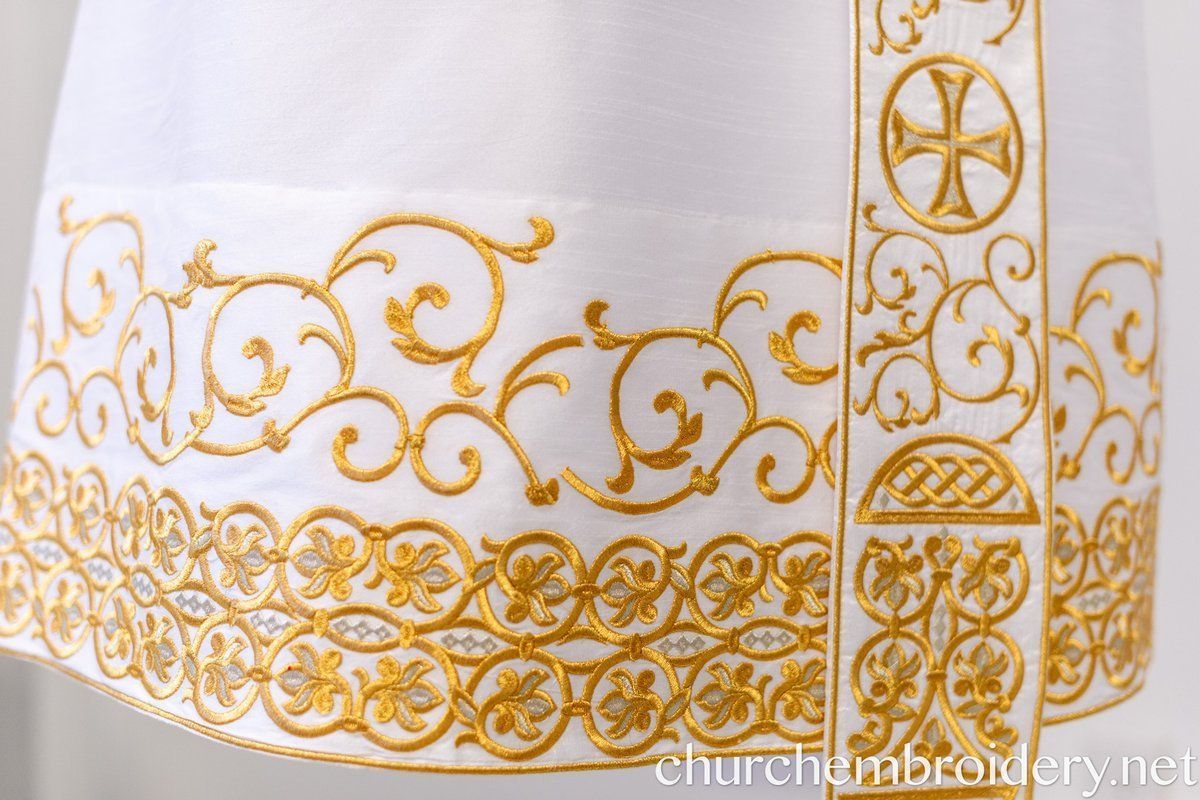
- Goldwork embroidery and full icon panels. A simpler hand-embroidered set serves a new priest well; he can commission a more elaborate set later when he knows what he likes.
- Multiple colours of cuffs (poruchi). Most priests serve happily with one all-purpose pair of gold cuffs for years.
- Bishop-grade ornaments — pearl-and-gemstone embroidery, large pectoral icons, etc. These are not appropriate for a new presbyter.
- The nabedrennik and epigonation — these are episcopal honours, granted by his bishop after years of service. Do not order them in advance.
Sizing: How to Get It Right Without the Surprise Factor
Custom vestments are sized to the priest's body. The ordination gift is almost always a surprise, but the sizing needs to be correct, so coordinate with someone close to the candidate.
Best approaches:
- If he has been serving as a deacon: ask his existing sticharion-maker for his measurements on file. Most workshops keep them. We do — if he has ordered vestments from us before, we can simply make the priestly set to his measurements without involving him.
- If he is being ordained from the diaconate or from another vestment-maker: ask his wife, his godfather, or his bishop's deacon to quietly verify measurements. We provide a simple online measurement form with diagrams.
- Critical measurements: height, neck girth, shoulder width, sleeve length, chest girth, chest width across the back, waist girth, garment length from the seventh cervical vertebra to about two inches above the floor, and approximate weight.
If sizing is uncertain, err on the side of slightly larger and longer — vestments can be adjusted down more easily than up, and a priest grows into them as he gets older.
Lead Times and the Ordination Calendar
A hand-embroidered set takes 6–12 weeks for a standard commission. For an ordination, plan to place the order at least three months ahead of the day, ideally four or five.
If you know the ordination date, count backwards:
- Month -5 to -4: Decide on the gift. Coordinate with the bishop's office to confirm the date is firm.
- Month -4: Get measurements (quietly). Reach out to the vestment maker; confirm style (Greek or Russian cut), colour (gold for the ordination day), and embroidery level.
- Month -3: Place the order. Receive a design proof if iconographic panels are involved.
- Month -1: Receive the vestments; check fit on a hanger; press lightly if needed.
- Day before: Bring them to the church. The candidate's parents or godparents traditionally lay them on the altar the night before.
If you only have six weeks notice (which happens — the church doesn't always run on long timelines), tell us when you order. Rush production is possible for ordinations, but lead times shorten what is possible (less complex embroidery, simpler trim).
The Coordinated Set: What Makes a Gift Memorable
A parish gift that goes beyond the merely functional usually includes one or more of these touches:
- A personalised inscription — the new priest's monogram (his initial in Slavonic or Greek) embroidered on the back of the phelonion or on the poruchi.
- The parish's patronal saint embroidered on the back — particularly meaningful when the new priest is being assigned to a different parish, as a permanent reminder of where he was raised up.
- A matching set of bookmarks with the date of ordination embroidered in gold thread on one tab — a quieter, more personal companion to the main vestments.
- A pectoral cross matched to the embroidery — coordinated metalwork and embroidery is the mark of a well-thought-through gift.
None of these add huge cost — usually $50–150 each — and they turn a "gift" into "your set, from your parish."
Budget: What to Expect
A realistic budget guide for a complete first ordination set:
| Level | Includes | Approximate cost |
|---|---|---|
| Starter | Phelonion, sticharion, epitrachelion, zone, cuffs in gold brocade with embroidered trim | $700–1,200 |
| Mid-range | Same set with hand-embroidered cross panel on phelonion back, embroidered cuffs, monogram | $1,400–2,200 |
| Premium | Hand-embroidered icon panel on the back of the phelonion (patronal saint or Resurrection), goldwork on trim, custom embroidery throughout | $2,500–4,500 |
Most parishes raise funds through a special collection or several donors splitting the cost. We've seen everything from $500 community collections that produced a beautiful starter set to $5,000+ commissions with full goldwork icon panels — both honoured the day appropriately.
One Last Tradition Worth Knowing
In many Slavic parishes, when the ordination set is presented to the new priest, his mother, his wife, or his godmother first lays the vestments on the altar the evening before the ordination. The priest-elect kneels at the altar through the all-night vigil with the vestments before him. At the moment of ordination, the bishop calls him forward and vests him from the cloth that has been waiting on the holy table. The gift is not just clothing; it is a thread from the parish that raised him to the altar he will now serve.
It's a long-standing custom and worth honouring when you can.
To begin planning a commission, browse our priest vestments category or send us a note through our contact page with the ordination date, the candidate's tradition (Greek or Slavic cut), and any ideas the parish has discussed. We'll send back a quote and timeline within a day or two.