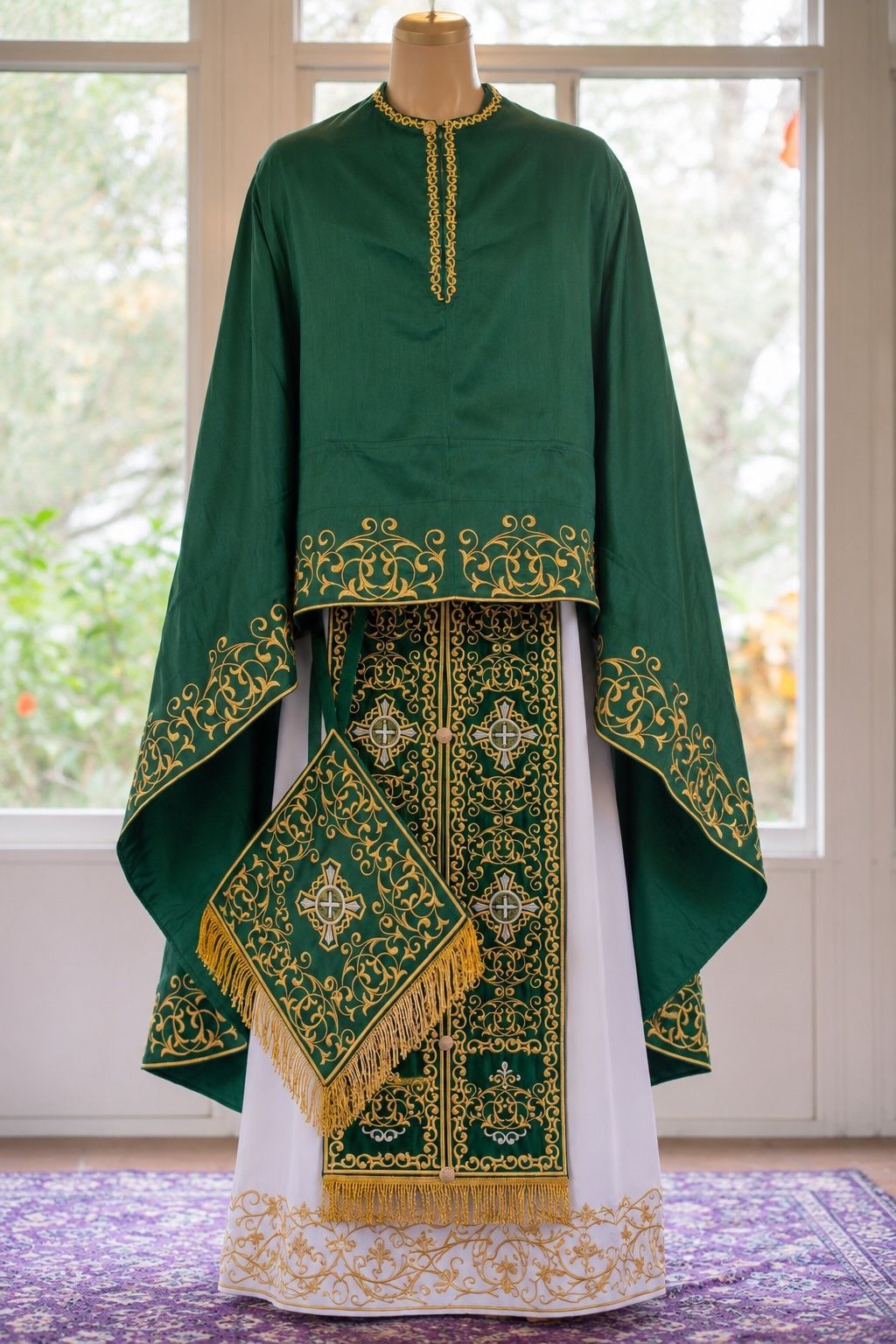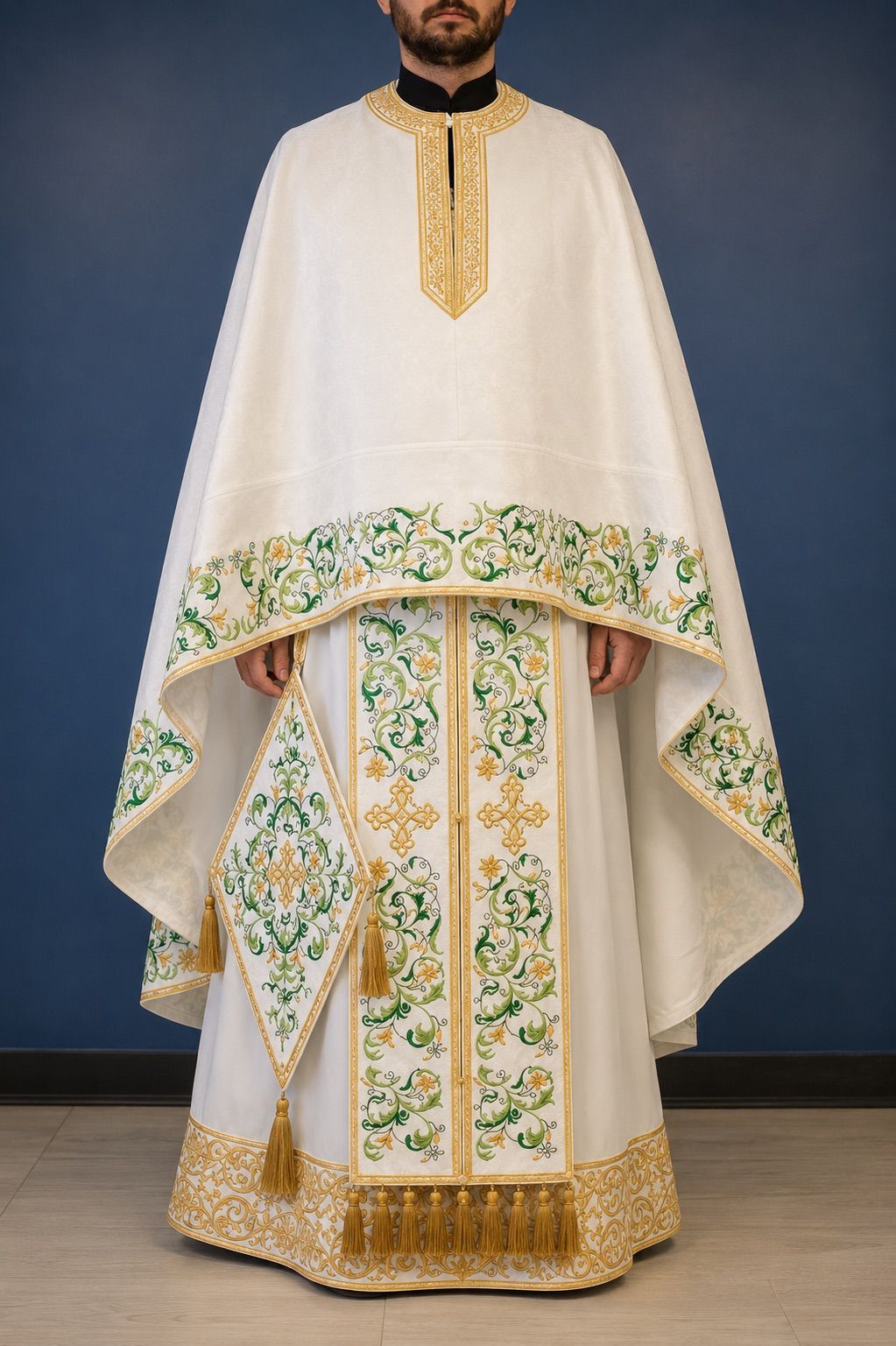
Orthodox vestments are not bought off a rack. Every phelonion, sticharion, and sakkos is fully embroidered and made to order to a specific clergyman's body, which is why a few accurate measurements matter more than anything else in the commission. A set built from good numbers hangs cleanly from the shoulders, clears the floor by the right margin, and lets the priest raise his arms at the elevation without the whole garment lifting. A set built from guesses never quite sits right, no matter how fine the brocade.
This guide explains exactly which measurements to take, how to take them properly, and how to send them to us. If you'd rather skip straight to the form, you can send your measurements here — but read the notes below first, because two or three common mistakes account for almost every fit problem we see.
What You'll Need
- A soft tailor's tape measure (not a steel construction tape).
- A second person to take the measurements — self-measuring across the back is unreliable.
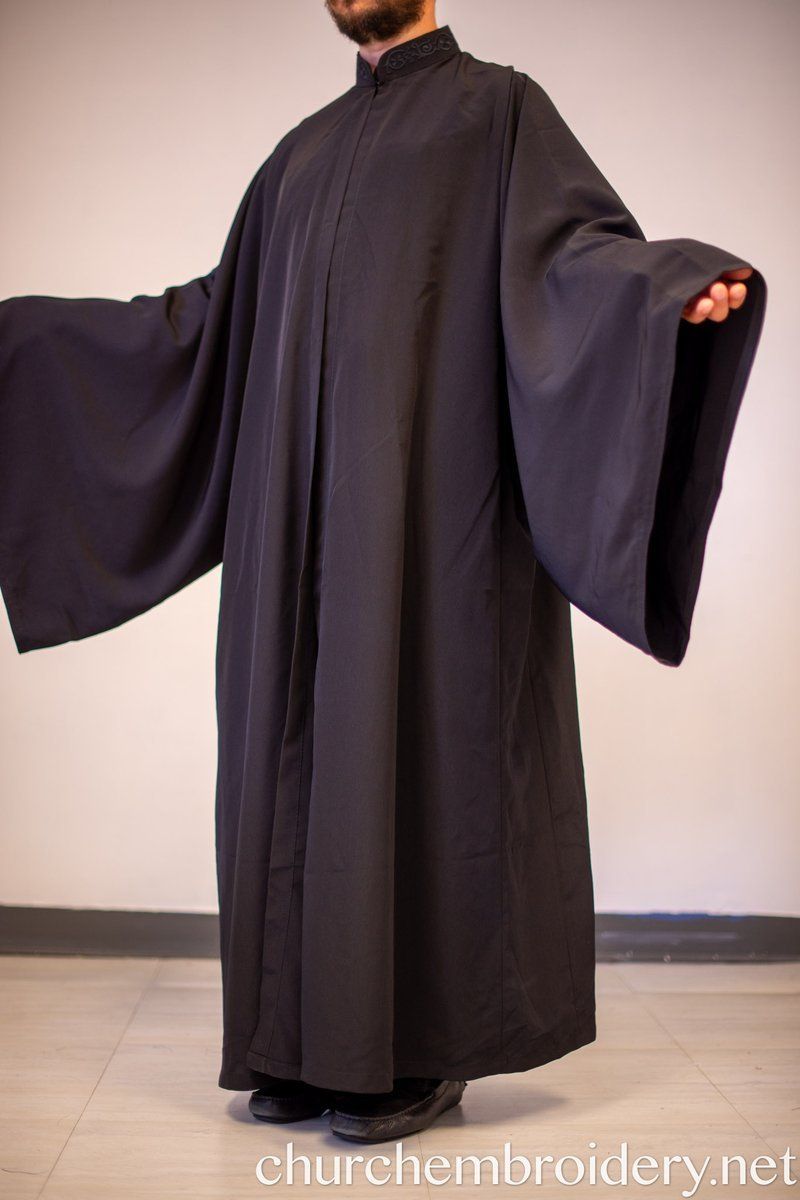
- The cassock (podriasnik/riassa) the clergyman normally wears under his vestments. Always measure over the cassock, because that is what the vestments are worn over.
That last point is the single most common error. Vestments are worn over a cassock, so every relevant measurement must be taken with the cassock on. Measuring over a shirt and then adding vestments over a cassock will make the set sit too tight and too short.
The Core Measurements
1. Height (front length)
This is the most important single number for a phelonion and a sticharion. Measure from the base of the neck (where the collar of the cassock sits) straight down the front to the desired hem — normally the top of the shoe, so the vestment clears the floor by an inch or two. Too long and it drags and trips; too short and it looks unfinished.
2. Shoulder width
Measure across the back from the point of one shoulder to the point of the other. This sets how the yoke of the sticharion and the shoulders of the sakkos sit.
3. Sleeve length
For the sticharion and sakkos, measure from the shoulder point down the outside of the arm to the wrist bone, with the arm relaxed at the side.
4. Chest / girth
Measure the fullest part of the chest, over the cassock, keeping the tape level all the way around. For fuller builds this number protects against a sticharion that pulls across the front.
5. Back length (for the phelonion)
The phelonion is longer at the back than the front. Measure from the base of the neck down the back to where you want the rear hem to fall — usually mid-calf to ankle, depending on tradition and preference.
Measurements by Garment
| Garment | Key measurements |
|---|---|
| Phelonion | Front length, back length, shoulder width |
| Sticharion | Full front length, shoulder width, sleeve length, chest |
| Sakkos (bishop) | Front length, shoulder width, sleeve length, chest, height |
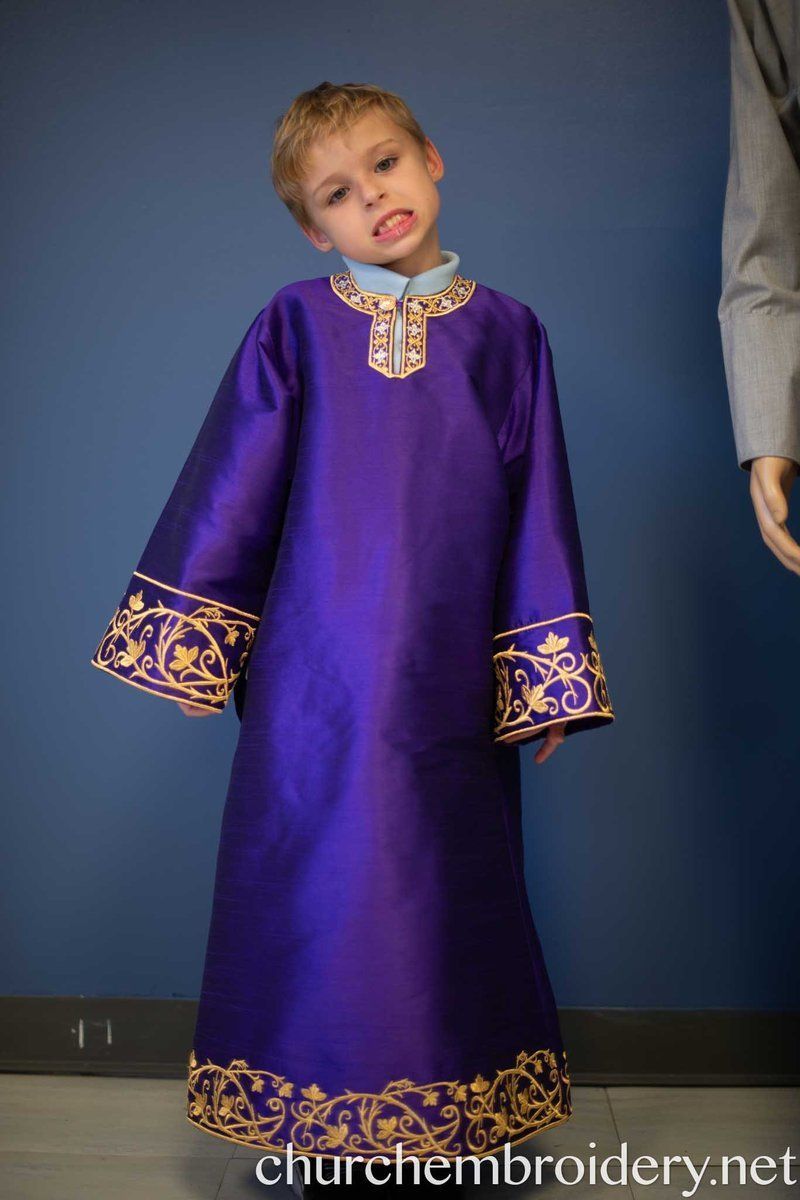
| Deacon's sticharion | Full length, shoulder width, sleeve length, chest |
For the difference between these garments and who wears which, see our overview of the sticharion, phelonion, and sakkos compared. Deacons have a few specifics of their own, covered in our guide to deacon vestments.
Three Mistakes That Cause Almost Every Fit Problem
- Measuring without the cassock. Always measure over the cassock that will be worn underneath.
- Guessing the height from a clothing size. A "size 52" suit tells us very little about how a phelonion should hang. Send the actual length in inches or centimetres.
- Rounding "to be safe." Don't add inches as a margin — we build in the correct ease ourselves. Send the true measurement and tell us the clergyman's normal build (slim, average, full); we handle the rest.
Inches or Centimetres — Either Is Fine
Send whichever you measured in, just label it clearly. Mixing the two ("chest 100, height 58") is a frequent source of confusion, so pick one system per order. A photograph of the clergyman in his cassock, taken straight on, is also enormously helpful — it lets us sanity-check the numbers against the actual proportions before a single thread is cut.
How to Send Your Measurements
The simplest way is our online measurements form — it takes about two minutes and walks you through each field. You can also reply to any of our emails with the numbers, or contact us directly with questions about a specific garment or an unusual build. We review every set of measurements by hand before production begins, and we'll come back to you if anything looks off.
Once we have accurate measurements on file, every future order for that clergyman is faster and easier — whether it's a single priest vestment set this year and a deacon set the next. If you're outfitting a parish from scratch or preparing for an ordination, pair this guide with our articles on how to choose vestments for your parish and what to order for a new priest's ordination.
Measured well, a made-to-measure set is one a priest will reach for, comfortably, for many years. We're glad to help you get the numbers right.